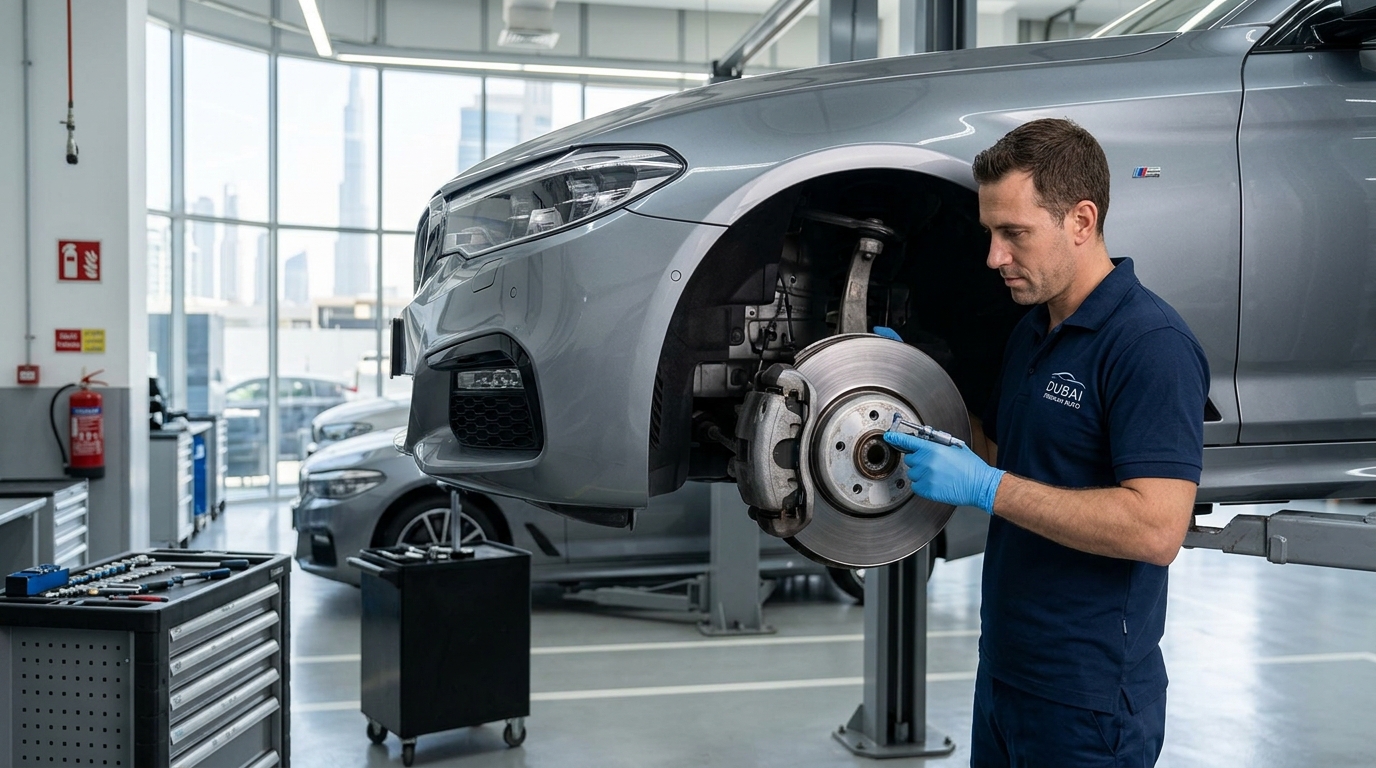
Car Brake Repair in Dubai: Signs You Should Never Ignore
Dubai’s bustling roads and fast-paced driving environment demand one thing above all else: impeccable vehicle safety. Among all your car’s critical components, your brakes are arguably the most vital for your peace of mind and the safety of everyone around you. Whether you’re a daily commuter, a taxi fleet owner, an expat new to the city, or simply someone searching for reliable car maintenance, understanding the warning signs of brake issues is paramount. Ignoring these indicators can lead to dangerous situations and costly repairs down the line. This guide will walk you through the undeniable signs that signal it’s time for professional car brake repair in Dubai.
Squealing, Grinding, or Clicking Noises: Your Brakes Are Talking
One of the most common and often first indicators of brake trouble comes in the form of auditory warnings. Don’t dismiss unusual sounds – they are your car’s way of telling you there’s a problem.
What Those Sounds Mean:
- Squealing: A high-pitched squeal often indicates worn brake pads. Many modern brake pads come with built-in wear indicators designed to emit this sound when they’re nearing the end of their lifespan, signaling you need new pads.
- Grinding: A much more serious sound, grinding typically means your brake pads are completely worn out, and the metal backing plates are rubbing directly against your brake rotors. This causes significant damage to the rotors and severely reduces braking effectiveness.
- Clicking: While less common, a clicking sound could point to loose brake calipers, components, or even a foreign object lodged in the braking system.
Why It’s Critical in Dubai’s Traffic:
Dubai’s heavy traffic, especially during peak hours, often requires sudden braking. Relying on compromised brakes in such conditions is extremely risky. Addressing these noises promptly can prevent more extensive damage and ensure your safety.
A Spongy or Soft Brake Pedal: Losing Pressure?
The feel of your brake pedal is a direct indicator of your braking system’s health. If your pedal feels unusually soft, or you have to press it much further down than usual to get a response, it’s a red flag.
Loss of Pressure Explanation:
A spongy brake pedal usually signifies a problem with the hydraulic system. This could be due to air in the brake lines, a leaking brake fluid reservoir, or even issues with the master cylinder. When brake fluid is compromised, or air is introduced, the pressure needed to engage the brakes effectively is lost.
Danger of Delayed Reaction:
In Dubai, where highway speeds are common and unexpected stops can occur, a delayed or weak braking response can have catastrophic consequences. This issue demands immediate attention from a professional car brake repair service.
Your Car Pulls to One Side When Braking: Uneven Performance
If you notice your car veering or pulling strongly to one side every time you apply the brakes, it’s a clear sign of an imbalance in your braking system.
Uneven Wear or Caliper Issues:
This usually happens when one brake pad or caliper is applying more pressure than the others. Potential causes include a stuck caliper, unevenly worn brake pads, or even issues with the brake hose leading to one wheel. It might also indicate a problem with the wheel alignment, which can exacerbate braking issues.
Impact on Control and Safety:
A car that pulls to one side during braking compromises steering control, making your vehicle unpredictable, especially at higher speeds or during emergency stops. This is a significant safety concern that needs to be resolved by experts in car brake repair in Dubai.
Vibrations or Pulsations When Braking: Warped Rotors
Do you feel a pulsating sensation through your brake pedal, or even through the steering wheel, when you brake? This is a strong indicator of warped brake rotors.
Warped Rotors Explained:
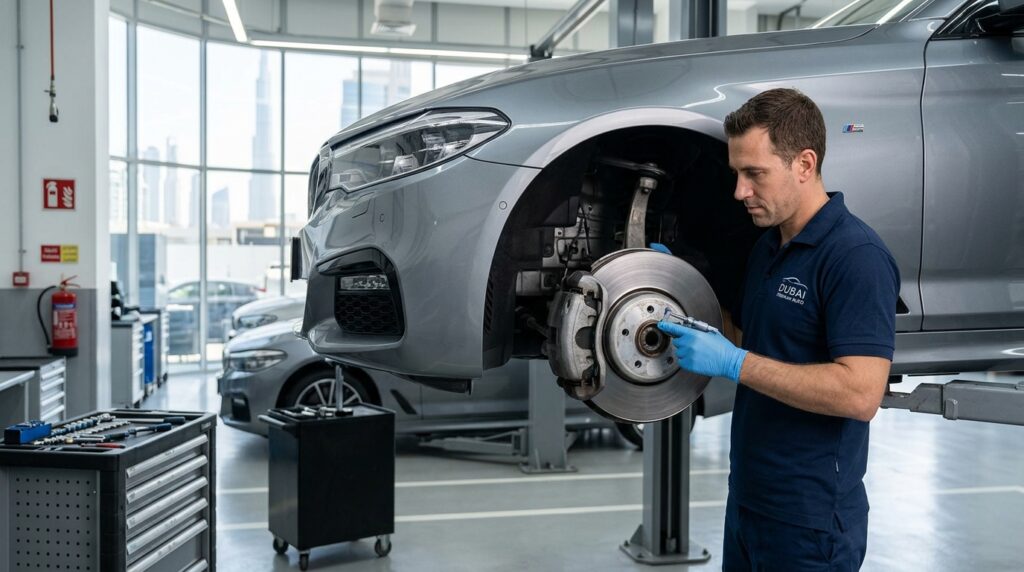
Brake rotors are the discs that your brake pads clamp onto to stop your car. Overheating from heavy braking, or simply wear and tear, can cause these rotors to become uneven or “warped.” When the pads press against an uneven surface, you feel the vibrations.
Why This Needs Immediate Attention:
Warped rotors reduce the effectiveness of your brakes, leading to longer stopping distances and an uncomfortable driving experience. In Dubai’s often intense heat and stop-and-go traffic, rotors can easily be put under strain. Ignoring warped rotors will only lead to further degradation of your braking system.
Burning Smell After Braking: Overheating Warning
A pungent, chemical-like burning smell, particularly after repeated or heavy braking, is a serious sign of overheating brakes.
Overheated Brakes or Clutch Issues:
This smell often indicates that your brake pads or fluid are overheating. This can occur from excessive use, riding the brakes, or in some cases, a stuck caliper causing continuous friction. For manual transmission vehicles, it could also indicate an issue with the clutch if you’re also experiencing difficulty shifting.
Risk of Brake Fade:
Overheated brakes can lead to “brake fade,” a dangerous condition where your brakes temporarily lose much of their stopping power. This is incredibly dangerous, especially on Dubai’s highways. If you notice this smell, pull over safely and allow your brakes to cool before seeking professional inspection.
Warning Light On Your Dashboard: Don’t Ignore the Indicators
Modern vehicles are equipped with sophisticated diagnostic systems. If a brake-related warning light illuminates on your dashboard, it’s a direct signal from your car that something is wrong.
Different Brake-Related Lights:
- Brake System Warning Light (usually an exclamation mark in a circle or the word “BRAKE”): This can indicate low brake fluid, a problem with the anti-lock braking system (ABS), or even the parking brake being engaged.
- ABS Warning Light: If this light comes on, your anti-lock braking system may not be functioning correctly. While your regular brakes might still work, the ABS feature (which prevents wheel lock-up during hard braking) will be disabled.
Don’t Ignore the Indicators:
These lights are not just suggestions; they are critical warnings. Consult a specialist for car brake repair in Dubai immediately if any brake-related warning light appears. It’s a proactive step to prevent potential hazards.
Reduced Braking Performance: Longer Stopping Distances
Perhaps the most alarming sign is a general reduction in your car’s ability to stop. If you notice that your car takes longer to come to a halt than it used to, or if you have to apply significantly more pressure to achieve the same braking effect, your brakes are failing.
Longer Stopping Distances:
This can stem from a variety of underlying issues, including critically worn brake pads, contaminated brake fluid, air in the brake lines, or a failing master cylinder. Whatever the cause, longer stopping distances dramatically increase your risk of collision.
Factors Affecting Brake Efficiency:
Beyond wear and tear, factors like heavy loads, aggressive driving, and even the intense Dubai heat can impact brake efficiency. Regular maintenance is key to preventing this dangerous scenario.
Don’t Gamble with Your Safety: Get Your Brakes Checked Today
Your brakes are your first line of defense on the road. Ignoring any of these warning signs is a gamble you cannot afford to take, especially in the dynamic driving conditions of Dubai. Whether you’re an individual car owner, managing a fleet, or an expat seeking reliable vehicle care, timely car brake repair is non-negotiable.
If you’ve noticed any of these symptoms, don’t wait for a small problem to become a major safety hazard. Prompt action can save lives and prevent expensive repairs. Take the proactive step – book a professional brake inspection and repair today. Our expert technicians specialize in comprehensive car brake repair Dubai services, including convenient mobile car repair Dubai solutions to get you safely back on the road.