Beat the Heat: Essential Tips to Safeguard Your Car’s Cooling System During 40°C+ Days
The scorching summer sun, especially in regions like the UAE and other Gulf countries, poses a significant challenge to even the most robust vehicles. With temperatures soaring past 40°C, your car’s engine is under immense stress. For daily commuters, ride-share drivers, families planning long summer drives, and especially those who tend to delay car maintenance, understanding and protecting your car’s cooling system isn’t just good practice—it’s crucial for preventing costly breakdowns and ensuring your safety on the road.
Your car’s cooling system is the silent guardian against engine meltdown. Without proper care, the extreme heat can quickly push your vehicle to its limits, leading to overheating, engine damage, and leaving you stranded. This guide provides essential, actionable tips to keep your car running smoothly, even when the mercury skyrockets.
Why Your Car’s Cooling System is Your Summer Lifeline
At its core, your car’s engine generates a tremendous amount of heat through the combustion process. The cooling system’s primary job is to dissipate this heat, maintaining an optimal operating temperature. It circulates a mixture of coolant and water through the engine block, absorbing heat, and then releases that heat into the atmosphere via the radiator. When this system fails under extreme heat, the consequences can be catastrophic:
- Engine Overheating: The most immediate and common issue, leading to potential engine seizure.
- Head Gasket Failure: High temperatures can warp engine components, causing expensive head gasket damage.
- Reduced Performance: An engine struggling with heat won’t perform efficiently.
- Breakdowns: Being stranded on the side of a scorching road is not just inconvenient, it can be dangerous.
Proactive Measures: Your Go-To Guide for Extreme Heat
Prevention is always better (and cheaper) than cure. Here are the essential checks and maintenance tips to safeguard your car’s cooling system during those 40°C+ days.
The Golden Rule: Regular Coolant Checks and Replenishment
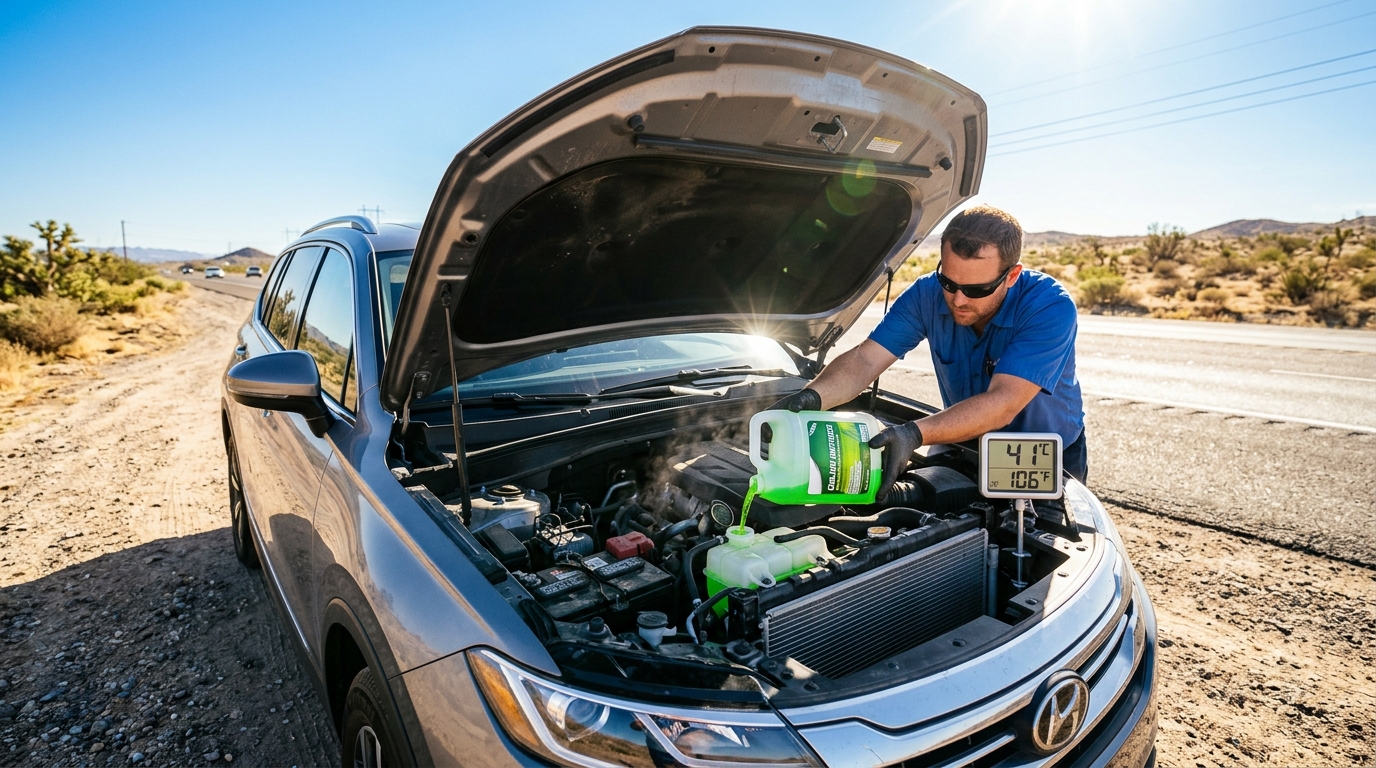
Coolant (often called antifreeze) is the lifeblood of your cooling system. It prevents the water from boiling in high temperatures and freezing in low temperatures (though freezing is less of a concern in the Gulf!).
- Check Levels Frequently: Always check your coolant level when the engine is cold. The reservoir should be filled to the ‘MAX’ line. If it’s consistently low, you might have a leak.
- Use the Right Mixture: Ensure you’re using a 50/50 mix of distilled water and the manufacturer-recommended coolant type. Using plain water reduces the boiling point and corrosion protection.
- Coolant Flush & Replacement: Coolant degrades over time, losing its protective properties. Refer to your car’s manual for the recommended flush and replacement schedule. Don’t skip this vital service!
Radiator Care: The Heart of Heat Dissipation
The radiator is where your car sheds most of its heat. Keeping it in top condition is paramount.
- Keep it Clean: Over time, bugs, leaves, dust, and road debris can clog the radiator fins, restricting airflow. Carefully clean the external fins with a soft brush or compressed air.
- Inspect for Damage: Look for any signs of leaks (often indicated by discolored crusty deposits), dents, or corroded fins. Even minor damage can impede its efficiency.
- Professional Inspection: A professional can perform a pressure test to detect hidden leaks and ensure optimal flow.
Hoses, Clamps, and Belts: The Unsung Heroes
These seemingly small components play a critical role in the cooling system’s integrity.
- Inspect Hoses: Check radiator and heater hoses for cracks, bulges, softness (spongy feel), or hardness (brittle feel). Squeeze them gently; they should be firm but pliable.
- Secure Clamps: Ensure all hose clamps are tight and free from corrosion. Loose clamps can lead to leaks.
- Check Belts: The serpentine belt (or accessory drive belt) drives the water pump. Inspect it for cracks, fraying, or excessive wear. Ensure it has the correct tension.
Thermostat Functionality: The Engine’s Temperature Gatekeeper
The thermostat regulates engine temperature by controlling the flow of coolant. A faulty thermostat can lead to rapid overheating or prevent the engine from reaching its optimal operating temperature.
- Signs of Trouble: If your temperature gauge rapidly climbs to hot, or if your engine takes an unusually long time to warm up, it could indicate a failing thermostat.
Cooling Fan Check: Crucial for Stop-and-Go Traffic
In traffic or at low speeds, natural airflow isn’t enough to cool the radiator. This is where the cooling fan (electric or mechanical) kicks in.
- Verify Operation: With your car idling and the AC on, the cooling fan should be running. If it’s not, or if it’s unusually noisy, it needs immediate attention.
Water Pump: The System’s Circulatory Powerhouse
The water pump circulates coolant throughout the engine and radiator. A failing pump can quickly lead to overheating.
- Look for Leaks: A common sign of a failing water pump is coolant leaking from the pump’s weep hole.
- Listen for Noise: Grinding or whining noises coming from the front of the engine can indicate worn bearings in the water pump.
Smart Driving Habits for Sizzling Roads
Your driving style can also impact your cooling system’s performance during extreme heat.
- Avoid Prolonged Idling: While it might feel cooler, prolonged idling in high temperatures can stress the cooling system, especially if the fan isn’t working optimally.
- Manage AC Usage: While essential, running your AC on max immediately after starting a super-hot car adds immediate load. Roll down windows for a minute to vent hot air before blasting the AC.
- Monitor Temperature Gauge: Make it a habit to glance at your temperature gauge regularly. If it starts to climb above normal, pull over safely and turn off the engine to allow it to cool.
- Reduce Engine Load: If possible, avoid heavy towing or carrying excessive loads during peak heat hours.
When to Call the Experts: Don’t Delay, Act Today!
While these tips empower you with crucial knowledge, some issues require professional diagnosis and repair. If you notice any signs of overheating, coolant leaks, strange noises, or simply want peace of mind before the mercury rises further, it’s time to consult with experts. Regular professional AC service, a comprehensive radiator check, or our convenient mobile service can identify potential problems before they escalate, ensuring your car remains a reliable companion through the toughest summer days.